Sections
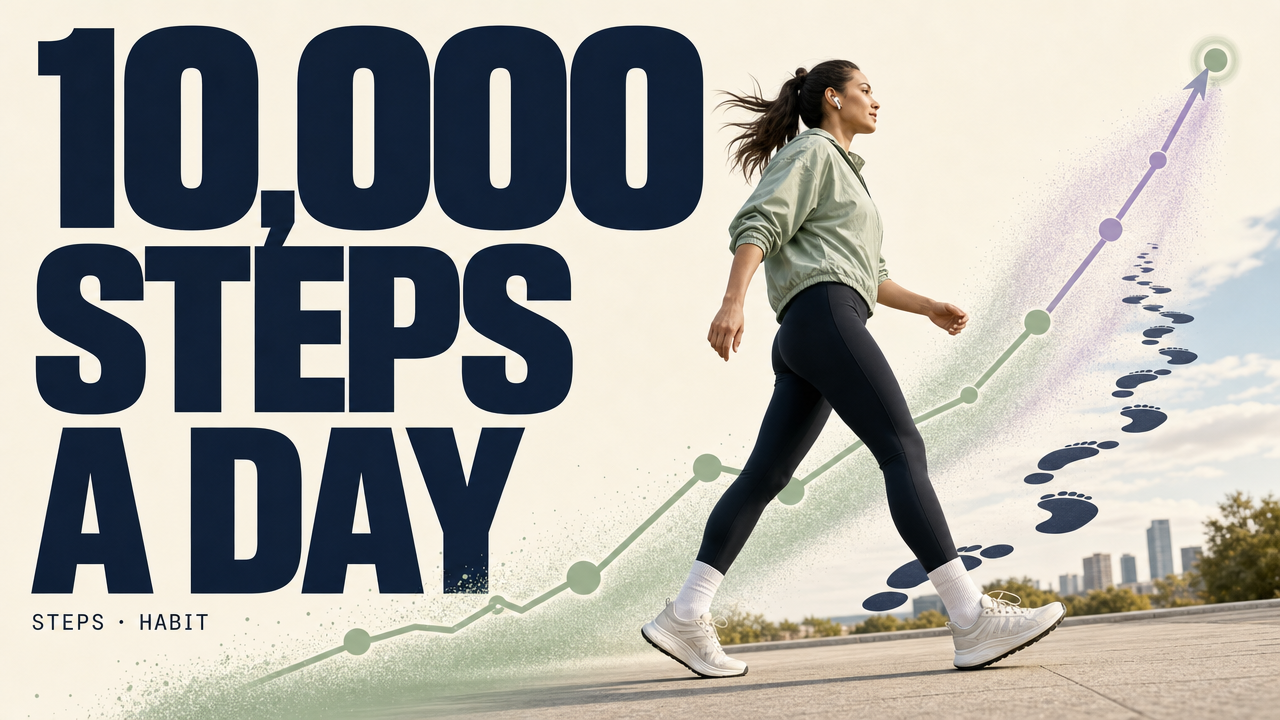
10,000 steps a day
v2by FitnessGrid
A daily step target with a single mid-afternoon check-in. The simplest activity habit that moves the needle on cardiovascular health, NEAT, and recovery — without touching training volume.
Get an AI coach that uses this skill
FitnessGrid is an AI coach that plans your week and adapts as you go. Install 10,000 steps a day and your coach will follow this protocol every week, learn from what you actually do, and adjust on the fly.
- Your coach builds the week from this skill
- Adapts to your actual progress, not a static template
- Free to start — no credit card, ~60 seconds to set up
A single daily step target, configurable but defaulting to 10,000. The number is arbitrary (the figure came from a 1960s marketing campaign), but it's a useful anchor: most sedentary adults track 3,000-5,000 steps a day, and the gap to 10,000 is the most productive activity intervention available.
A daily step card lands on the user's grid. A mid-afternoon nudge surfaces at 3pm if the user is < 60% of the target so far.
Decision rules for the coach
- Daily card, fresh each day. The resolver writes one step card per day with the target. Don't write multi-day blocks — steps don't average usefully across weeks the way calories do.
- Mid-afternoon nudge only. At 3pm local, if the user is below 60% of the daily target, a single check-in card surfaces. Not morning, not evening. Mornings have no signal; evenings are too late to course-correct.
- Don't lecture on misses. A 4,000-step day is fine. A three-day run of < 5,000 steps is the signal — surface it once, ask if anything's changed (travel, illness, weather). Then drop it.
- Adjust by goal, not feel. If the user has been hitting target for 4 weeks running without effort, suggest raising the target (default jump: +1,000 steps). If they've been missing target for 4 weeks, suggest lowering it — the goal that gets hit is better than the goal that gets abandoned.
- Steps are NEAT — don't double-count them as cardio. Steps contribute to daily energy expenditure but they don't replace conditioning work in a structured training programme. Mention this only if asked.
- Health-data integrations. Prefer the Health app / Google Fit step count over manual entry; the daily card auto-fills from synced data if available.


