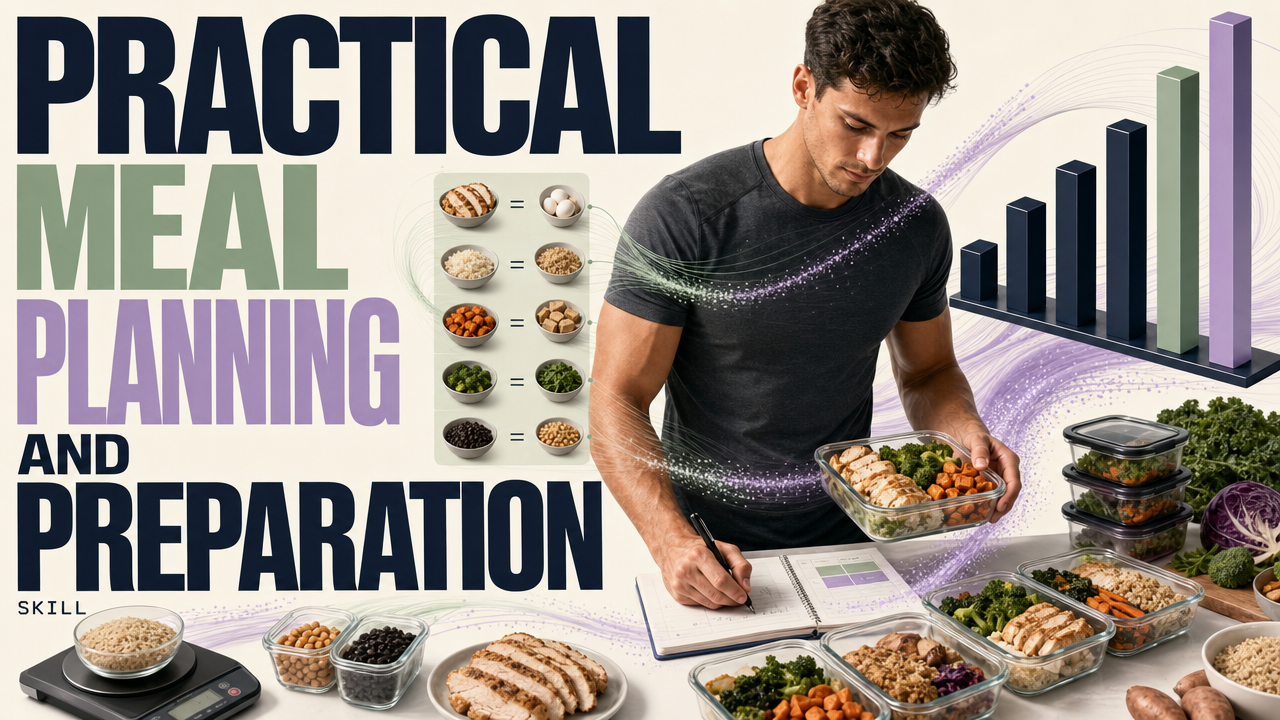
practical meal planning and preparation
v1by FitnessGrid
Translates numerical calorie and macronutrient targets into sustainable, batch-ready meal systems using equivalence lists and component prep.
nutritionmeal-prepmacrosbehavior-change
Get an AI coach that uses this skill
FitnessGrid is an AI coach that plans your week and adapts as you go. Install practical meal planning and preparation and your coach will follow this protocol every week, learn from what you actually do, and adjust on the fly.
- Your coach builds the week from this skill
- Adapts to your actual progress, not a static template
- Free to start — no credit card, ~60 seconds to set up
Procedure
-
Define the Numerical Baseline
- Calculate or retrieve the user's daily calorie and macronutrient targets.
- Divide these daily totals into a preferred number of "Meal Anchors"—fixed points in the user's existing schedule (e.g., Breakfast, Lunch, Post-Workout, Dinner).
-
Establish Meal-Equivalent Menus
- Create 3–5 "equivalent" meal templates for each anchor point.
- Ensure each template matches the required energy and macro content within a tight tolerance (±1g protein/fat, ±2g carbs, ±15kcal).
- Use
search_mealsorfind_meal_candidatesto identify foods that fit these specific brackets.
-
Implement Macro Equivalency Swaps
- Provide the user with "Equivalency Lists" to allow for flexibility without re-calculating:
- Proteins: Chicken breast, turkey breast, white fish, or tofu.
- Carbohydrates: Brown rice, quinoa, sweet potato, or oats.
- Fats: Avocado, almonds, or olive oil.
- Explain that these can be swapped 1:1 within their respective categories to maintain the macro profile.
- Provide the user with "Equivalency Lists" to allow for flexibility without re-calculating:
-
Organize Component-Based Batch Prep
- Advise the user to move from "Meal Prep" (fixed containers) to "Component Prep" (bulk storage).
- Follow the "Longest-First" prep sequence:
- Foundation Proteins: Batch-cook chicken, legumes, or fish.
- Foundation Grains: Prepare large batches of quinoa, rice, or farro.
- Foundation Veggies: Roast large trays of mixed vegetables.
- Store components separately to allow for "mix and match" variety throughout the week.
-
Reduce Cognitive Load through Automation
- Set up "Themed Days" (e.g., Meatless Monday, Taco Tuesday) to automate planning and reduce decision fatigue.
- Identify "Safety Net" meals: Encourage the user to freeze 2–3 portions of cooked meals in airtight containers for high-stress days.
-
Apply Micro-Changes for Adherence
- Instead of a total overhaul, suggest one "micro-change" per week (e.g., replacing one processed grain or adding one new vegetable).
- Use
update_preferencesorrememberto track these small wins and successful meal combinations to build long-term behavioral automation.


