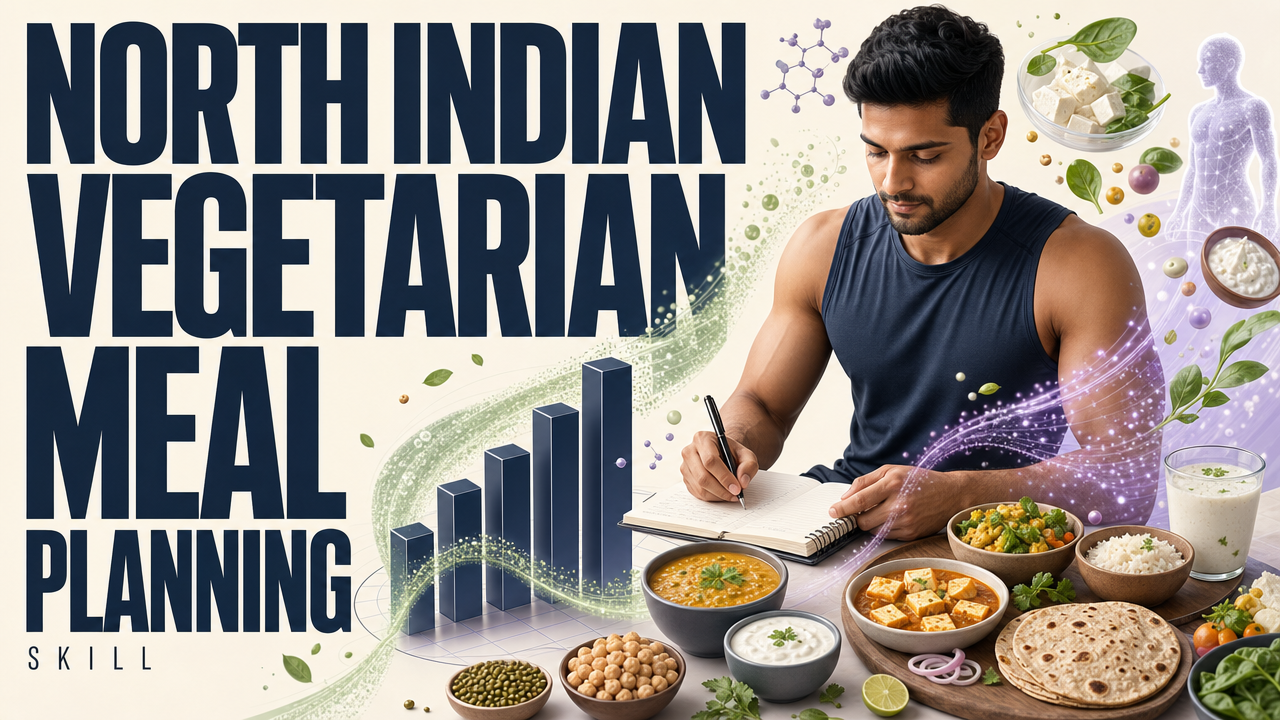
North Indian vegetarian meal planning
v1by FitnessGrid
Optimize lacto-vegetarian North Indian diets for protein density, glycemic control, and micronutrient bioavailability.
Get an AI coach that uses this skill
FitnessGrid is an AI coach that plans your week and adapts as you go. Install North Indian vegetarian meal planning and your coach will follow this protocol every week, learn from what you actually do, and adjust on the fly.
- Your coach builds the week from this skill
- Adapts to your actual progress, not a static template
- Free to start — no credit card, ~60 seconds to set up
Procedure
-
Assess Current Dietary Pattern: Use
get_user_preferencesandget_user_historyto identify typical intake of grains (wheat/rice), pulses, and dairy. Determine if the user has specific goals like weight loss or muscle building. -
Calculate targets: Use
compute_macrosbased on user profile. If the goal is metabolic health or weight management, target a high-protein distribution to offset the high carbohydrate nature of regional staples. -
Structue the Thali (Plate): When creating or recommending meals via
create_meal, apply the following evidence-based ratios:- 50% Non-starchy Vegetables: Prioritize greens (spinach/Saag), cauliflower (Gobi), or okra (Bhindi) for fiber and volume.
- 25% High-Quality Protein: Include thick dal, Chole (chickpeas), Rajma (kidney beans), or Paneer.
- 25% Complex Carbohydrates: Limit to one portion of whole-grain Atta roti or brown Basmati rice.
-
Enhance Protein Bioavailability:
- Ensure every grain-based meal is paired with a legume (e.g., Dal-Roti or Rajma-Chawal) to create a complete amino acid profile.
- Integrate dairy (Curd/Dahi or Paneer) to increase the protein-to-calorie ratio.
-
Optimize Glycemic Load:
- Recommend replacing refined wheat (Maida) or white rice with millets (Bajra, Jowar) which have a lower mean GI (~52.7).
- Advise against refined grain preparations that exceed a GI of 70+.
-
Address Micronutrient Gaps:
- Iron & Zinc: Instruct the user to add a Vitamin C source (e.g., a squeeze of lemon juice or Amla) to legume and spinach dishes to enhance non-heme iron absorption.
- Omega-3s: Suggest daily inclusion of flaxseeds (Alsi) or walnuts.
- Vitamin B12: Check for intake of fortified cereals or fermented dairy (curd); recommend supplementation if dairy intake is low.
-
Refine Culinary Practices:
- Encourage the use of turmeric, ginger, and garlic for anti-inflammatory benefits.
- Suggest using mustard oil or controlled amounts of Ghee over refined seed oils.
-
Log and Monitor: Use
create_mealto save these structured plans and monitor adherence to the "Thali" portioning via future history reviews.


