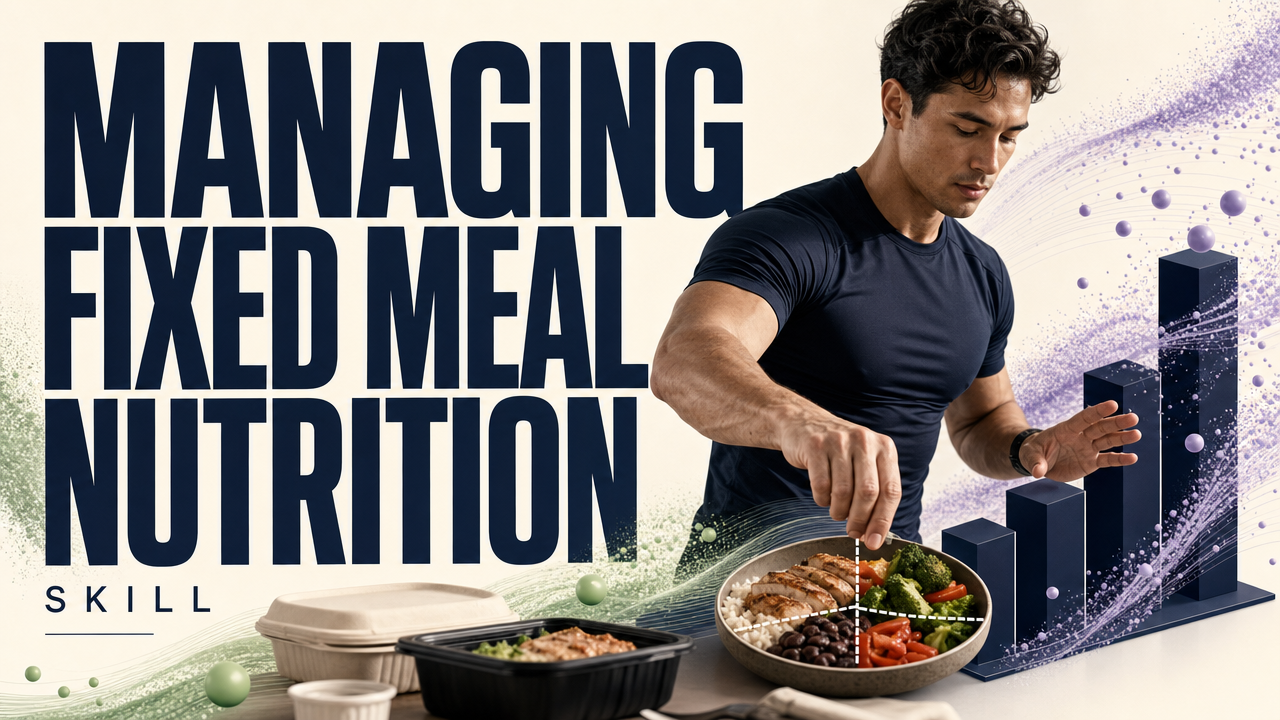
managing fixed meal nutrition
v1by FitnessGrid
Strategies for portion control and nutritional balance when consuming non-controllable shared meals or delivery services.
nutritionportion-controlbehavioral-changemeal-delivery
Get an AI coach that uses this skill
FitnessGrid is an AI coach that plans your week and adapts as you go. Install managing fixed meal nutrition and your coach will follow this protocol every week, learn from what you actually do, and adjust on the fly.
- Your coach builds the week from this skill
- Adapts to your actual progress, not a static template
- Free to start — no credit card, ~60 seconds to set up
Procedure
-
Assess the Environmental Context
- Identify if the user is dealing with a Shared Family Meal, Fixed Meal Delivery, Corporate/Buffet setting, or a Social Event.
- Use
get_user_preferencesto check for existing dietary constraints or weight management goals.
-
Apply Environmental Interventions
- For Shared/Family Meals: Recommend "Kitchen-to-Table" serving—portioning plates in the kitchen to avoid mindless second helpings from table-center dishes.
- For Delivery/Restaurant Meals: Recommend "Immediate Containment"—placing half the serving into a to-go container immediately upon arrival to create a physical boundary.
- Suggest "Plate Downsizing": Use smaller bowls or plates to leverage the visual illusion of a fuller meal.
-
Execute Visual Estimation (Hand Method)
- Instruct the user to verify proportions using anatomical markers:
- Protein: 1 palm-sized portion.
- Vegetables: 2 fist-sized portions (prioritize non-starchy).
- Carbohydrates: 1 cupped hand.
- Fats: 1 thumb-sized portion.
- Instruct the user to verify proportions using anatomical markers:
-
Implement Plate Re-Balancing
- Apply the "Healthy Eating Plate" model: Aim for 1/2 vegetables/fruit, 1/4 whole grains, and 1/4 protein.
- Volume Addition: If the fixed meal is low in fiber, instruct the user to add a side of raw greens or steamed vegetables to increase satiety.
- Sauce Management: Use the "dip the tip" method—dipping the fork into side sauces rather than pouring them over the meal.
-
Enforce Behavioral Protocols
- Sequence Eating: Instruct the user to eat fiber-rich vegetables first, followed by protein, then carbohydrates.
- Pacing: Advise putting utensils down between every bite to allow satiety signals to reach the brain.
- The One-Item Rule: In buffet settings, fill the majority of the plate with the single healthiest identified item before adding others.
-
Progressive Logging & Reflection
- Use
render_meal_logto review recent entries and identify "hidden" energy density or nutritional gaps. - Create a
create_notewith a specific target for the next fixed meal (e.g., "Leave two bites behind" or "Add one cup of spinach to delivery kit"). - Propose "Environmental Engineering": Suggest sitting further away from food sources (buffets/snack tables) at social events to reduce impulsive grazing.
- Use


