Sections
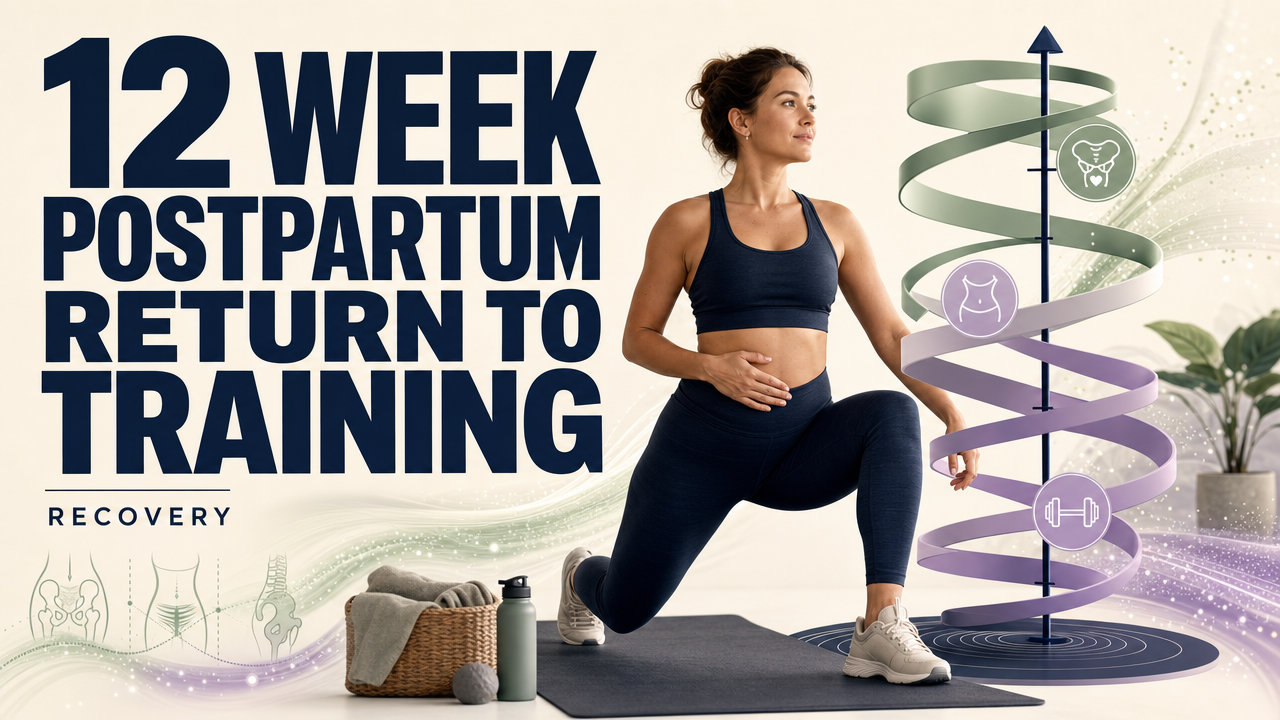
12-week postpartum return to training
v1by FitnessGrid
A symptom-led, three-phase recovery program prioritizing pelvic floor health, core stability, and progressive loading.
postpartumrecoverypelvic-floorcore-stabilitywomen's-health
Get an AI coach that uses this skill
FitnessGrid is an AI coach that plans your week and adapts as you go. Install 12-week postpartum return to training and your coach will follow this protocol every week, learn from what you actually do, and adjust on the fly.
- Your coach builds the week from this skill
- Adapts to your actual progress, not a static template
- Free to start — no credit card, ~60 seconds to set up
Procedure
1. Initial Assessment & Phase 1 Setup (Weeks 0–6)
- Safety Check: Confirm the user is in the early postpartum period. Use
create_noteto document the start date of Phase 1. - Phase 1 Programming: Use
create_workoutto schedule daily 5–10 minute walks and a restoration session focused on diaphragmatic breathing. - Execution: Add "360 Breath" (2+ mins) and "Pelvic Tilts" (2x10) using
add_exercise. - Coaching Cue: Provide the instruction: "Inhale to expand the ribs 360 degrees; exhale to gently lift the pelvic floor."
2. Transition to Phase 2: Foundation (Weeks 6–12)
- The Progression Gate: Before moving to Phase 2, verify the user has received healthcare provider clearance and perform a Diastasis Recti (DR) self-screening.
- Phase 2 Programming: Create 3 "Nap-Time" circuit sessions per week (3 rounds, 45s work / 15s rest).
- Exercise Selection: Include:
- Stability: Bird-Dogs ("Balance a glass of water on your back"), Modified Planks (elevated), and Pallof Presses.
- Unilateral/Lower Body: Bodyweight Squats, Glute Bridges ("Drive through heels"), and Single-leg balances.
- Micro-Progression: Every 2 weeks, use
update_workoutto increase volume (e.g., from 2 sets of 8 to 3 sets of 10) or intensity (adding light dumbbells) per the research blueprint.
3. Transition to Phase 3: Strength & Impact (Weeks 12+)
- The Hop Test: Before introducing impact or heavy loads, instruct the user to perform 10 single-leg hops.
- Assessment: Query the user for "Red Flags" using
record_safety_data:- Pelvic heaviness/bulging.
- Urinary leakage.
- Sharp pain near scar tissue.
- Programming Strength: If the Hop Test is passed, add Goblet Squats, Deadlifts, and Weighted Lunges using
add_exercise. - Running Protocol: Implement the "Walk-Run" protocol:
- Week 13: 4m walk / 1m run.
- Week 14: 3m walk / 2m run.
- Week 15: 2m walk / 3m run.
4. Symptom-Based Deloading (Ongoing)
- Monitoring: During every check-in, monitor for systemic fatigue or increased bleeding.
- Regression Protocol: If "Red Flag" symptoms (heaviness, leakage, or pain) are reported:
- Use
update_workoutto scale back to the previous phase's intensity. - Record the symptom in
record_safety_data. - Advise pausing progression until symptoms resolve or a professional is consulted.
- Use
5. Coaching Cues & Feedback
- General Cueing: Always emphasize "Exhale on the effort" during loaded movements.
- Review: Periodically use
get_user_historyto assess if progressive overload (Breath -> Alignment -> Load) is being maintained without triggering symptoms.


